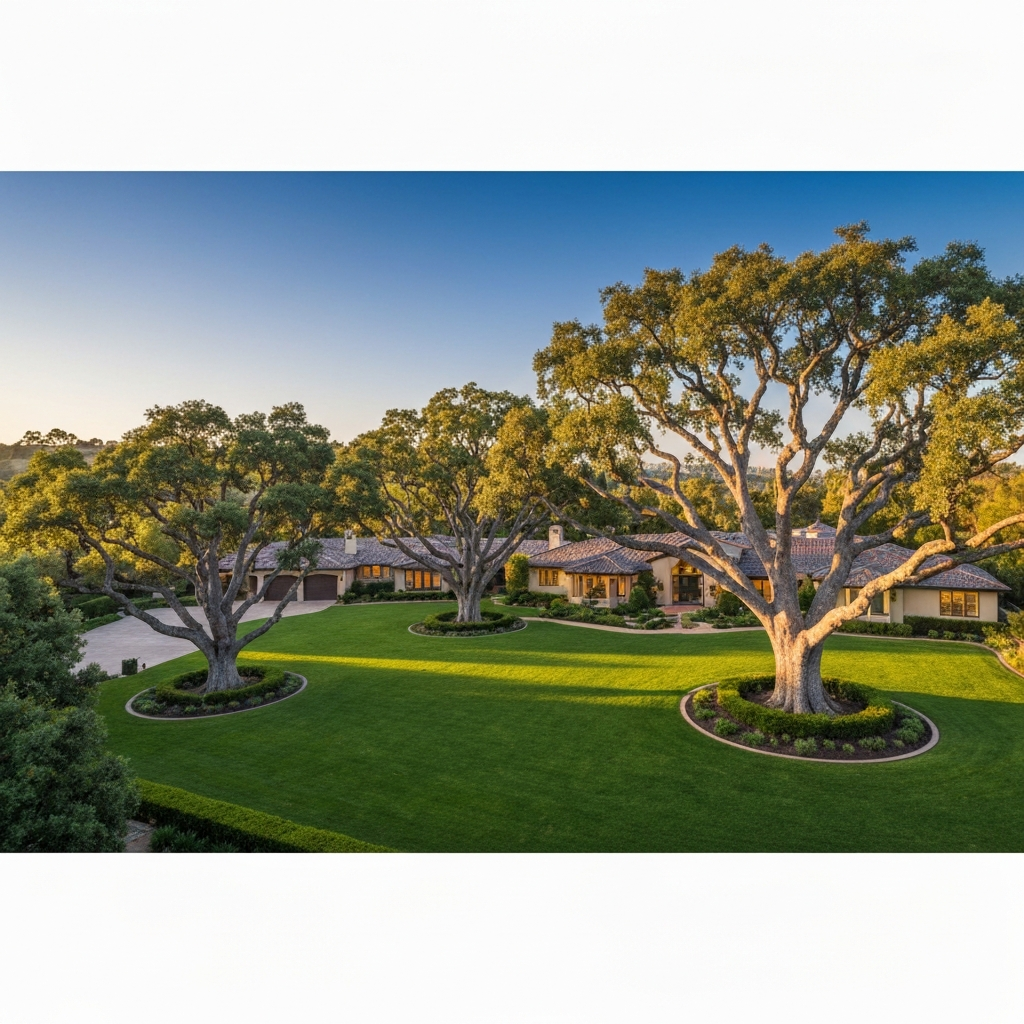
Fire-Resistant
Tree Species
A guide to selecting and planting trees that are naturally more resistant to ignition and radiant heat in Southern California.
What Makes a Tree Fire-Resistant?
In wildfire-prone areas like Malibu, Calabasas, and Montecito, the trees you choose to plant can significantly impact your property's survivability. While no plant is entirely fireproof, fire-resistant trees share several key characteristics that make them less likely to ignite and spread flames.
- High Moisture ContentLeaves are supple, moist, and often broad rather than needle-like.
- Low Volatile Oils and ResinsThey do not produce highly flammable sap, pitch, or aromatic oils (unlike eucalyptus or pines).
- Clean Growth HabitThey drop minimal dead wood, peeling bark, or dry leaves that can accumulate as fuel.
- Thick BarkBark acts as insulation, protecting the tree's vital inner tissues from radiant heat.
Top Fire-Resistant Trees for Southern California
Coast Live Oak (Quercus agrifolia)
Native and highly adapted to fire. Thick bark protects the trunk, and dense canopies can actually catch and extinguish flying embers. Requires proper pruning to remove lower ladder fuels.
View Species GuideCalifornia Sycamore (Platanus racemosa)
High moisture content in the leaves and a generally open branching structure. Excellent for riparian areas or well-irrigated zones within defensible space.
View Species GuideOlive Tree (Olea europaea)
Extremely drought-tolerant once established. When properly pruned to keep the canopy open and deadwood removed, they are excellent, low-fuel additions to luxury estates.
View Species GuideCitrus Trees
Lemons, oranges, and limes require regular irrigation, which keeps their moisture content high. They are generally considered very safe to plant near structures.
View Species GuideHighly Flammable Trees to Avoid
Certain trees are notorious for fueling wildfires due to their high resin content, volatile oils, and tendency to accumulate dry, dead material. If you live in a high fire hazard severity zone, you should strongly reconsider planting these, or aggressively manage existing ones:
- Eucalyptus: Contains highly flammable oils and sheds large amounts of peeling bark and leaves that ignite easily.
- Pines & Conifers: High resin content and needles that dry out quickly and catch fire rapidly.
- Cypress & Junipers: Often called "gasoline plants" by firefighters due to their extreme flammability and tendency to hold dead material inside the canopy.
- Palms (Unmaintained): Palm fronds and "beards" (dead fronds clinging to the trunk) are highly combustible and can send flaming embers long distances.
Maintenance is More Important Than Species
Even the most fire-resistant tree will burn if it is dead, dying, or suffering from severe drought stress. Conversely, a moderately flammable tree can be made much safer through rigorous maintenance.
Proper irrigation, regular removal of deadwood, and creating vertical spacing (removing ladder fuels) are the most critical steps in fire-safe landscaping. A healthy, well-watered Coast Live Oak is an asset; a dead, dry one is a massive liability.
Frequently Asked Questions
Are any trees completely fireproof?
No tree is completely fireproof. However, some trees are 'fire-resistant,' meaning their foliage and bark are less likely to ignite quickly, they do not produce excessive deadwood or combustible resins, and they can help slow a fire's spread if maintained properly.
What makes a tree fire-resistant?
Fire-resistant trees typically have high moisture content in their leaves, low sap or resin levels, minimal accumulation of dead wood and dry leaves, open and loose branching habits, and thick bark that protects the inner cambium layer.
Which trees should I avoid planting in fire-prone areas?
Avoid highly flammable trees such as Eucalyptus, Pines, Cypress, Junipers, and Acacia. These trees contain volatile oils, resins, and accumulate dry, combustible materials like needles and peeling bark that ignite easily and burn intensely.
Can I keep my existing mature oaks if I live in a fire zone?
Yes! Coast Live Oaks are actually considered highly fire-resistant when properly maintained. Their thick bark protects them, and their dense canopies can catch and extinguish embers. The key is proper pruning and removing ladder fuels beneath them.
How does irrigation affect fire resistance?
A well-hydrated tree is significantly more fire-resistant than a drought-stressed one. Even inherently fire-resistant species will become highly flammable if they are dry and dying. Proper deep-root watering during drought is critical for fire safety.
Fire Safety Assessment
Have our Certified Arborists evaluate your property for fire risks, ladder fuels, and defensible space compliance.
Schedule AssessmentNeed Expert Advice?
Schedule a consultation with our ISA Certified Arborists to evaluate your property's trees and plan a fire-resistant landscape.
Request a Free Consultation