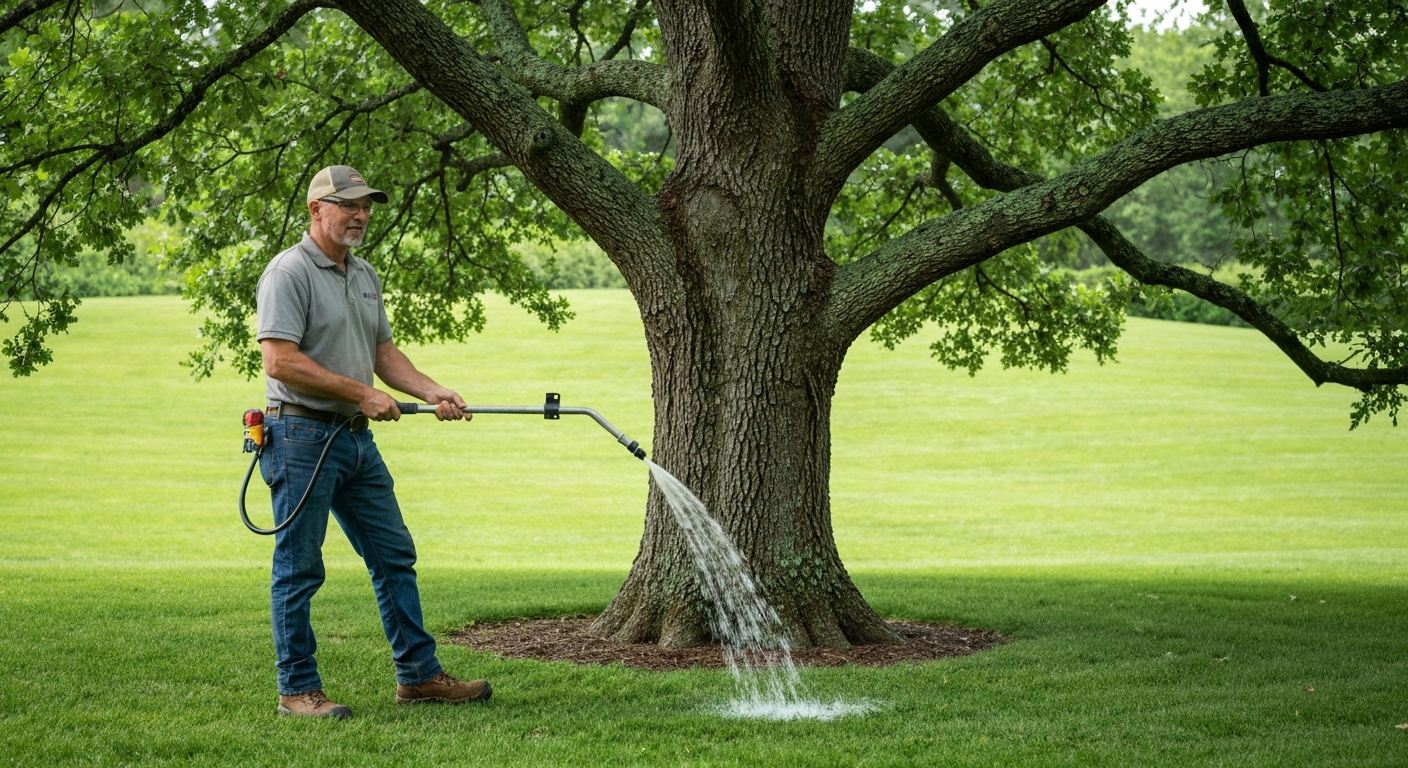
California Sycamore
A fast-growing, water-loving native known for its stunning mottled bark. Beautiful, but highly susceptible to fungal diseases and invasive borers.
The Riparian Giant of Southern California
The California Sycamore (Platanus racemosa) is a majestic, fast-growing deciduous tree native to the riparian canyons and riverbeds of Southern California. With its massive, twisting white-and-tan trunk and enormous, hand-shaped leaves, it is a centerpiece in many luxury estates and parks.
Unlike native oaks, which are highly drought-tolerant, the California Sycamore evolved along water sources. It requires significant, deep watering to thrive. When planted in dry, urban landscapes, it frequently suffers from drought stress, making it a prime target for disease and insects.
In recent years, the California Sycamore has come under severe threat from a combination of the native fungal disease Anthracnose and the devastating invasive Polyphagous Shot Hole Borer. Proactive Plant Health Care is no longer optional for this species—it is essential for its survival.
Species Profile
- Scientific NamePlatanus racemosa
- Native OriginCalifornia Riparian Zones
- Growth HabitDeciduous, Fast & Erratic
- Lifespan100 - 250 Years
- Mature Height40-100 Feet
- Drought ToleranceLow (Needs Deep Water)
Common Problems
California Sycamores are engaged in a constant battle with fungal pathogens and invasive borers.
Sycamore Anthracnose
A fungal disease that causes severe spring defoliation. It thrives in cool, wet weather. While rarely fatal on its own, the energy required to grow a second set of leaves exhausts the tree, making it vulnerable to other threats.
Polyphagous Shot Hole Borer
An invasive beetle that bores into the trunk, spreading Fusarium dieback fungus. It blocks the vascular system, leading to rapid decline. Requires immediate, aggressive treatment.
Powdery Mildew
A white, powdery fungus that covers the leaves in late summer and fall, causing them to distort and drop early. Often exacerbated by poor airflow and high humidity.
Recommended Plant Health Care
Keeping a California Sycamore healthy requires aggressive disease management and proper hydration.
Preventative Fungicide Injections
To control Anthracnose, we recommend systemic fungicide injections performed by a Certified Arborist in late winter or early spring before the leaves emerge.
Deep Summer Watering
Unlike oaks, Sycamores need water. During the dry summer months, provide slow, deep watering at the dripline to mimic their natural riparian habitat and prevent drought stress.
Deep Root Fertilization
Because Anthracnose forces the tree to expend massive amounts of energy regrowing leaves, annual fertilization is critical to replenish lost nutrients and maintain vigor.
Borer Monitoring & Treatment
Routine inspections for Shot Hole Borer are essential. If detected, immediate targeted trunk injections and soil treatments are required to save the tree.
California Sycamore FAQs
Related Resources
Protect Your Sycamore
Don't let Anthracnose or borers destroy your tree. Schedule a comprehensive inspection with our Certified Arborists.
Schedule Free Consultation