Citrus Trees
Lemons, oranges, and limes are the jewel of the backyard orchard. They require heavy feeding and aggressive protection from devastating invasive pests.
The Crown Jewel of the SoCal Garden
No Southern California estate is complete without a citrus tree. Whether it's a Meyer Lemon in a courtyard or a full orchard of Valencia Oranges and Bearss Limes, citrus trees provide beautiful evergreen foliage, intensely fragrant blooms, and fresh fruit year-round.
However, citrus trees are highly demanding. They are "heavy feeders," meaning they quickly deplete the soil of nitrogen and essential micronutrients like iron and zinc. Without regular, targeted fertilization, they quickly turn yellow and stop producing fruit.
Today, the greatest threat to citrus in California is Huanglongbing (HLB), a fatal bacterial disease spread by the Asian Citrus Psyllid. Protecting your citrus requires vigilant monitoring and proactive Plant Health Care to manage pests before they can transmit the disease.
Species Profile
- Scientific NameCitrus spp.
- Common TypesLemon, Orange, Lime, Grapefruit
- Growth HabitEvergreen, Rounded
- Lifespan50+ Years
- Mature Height10-25 Feet
- Nutrient NeedsExtremely High
Common Problems
Citrus trees are under constant attack from invasive insects and suffer quickly in nutrient-poor urban soils.
Asian Citrus Psyllid & HLB
The most severe threat to citrus in California. The psyllid insect transmits Huanglongbing (HLB), an incurable disease that causes bitter fruit and kills the tree. Strict pest management is required.
Nutrient Deficiencies
Yellowing leaves with green veins indicate an iron or zinc deficiency. Overall yellowing indicates a lack of nitrogen. Citrus requires regular, targeted fertilization to remain healthy and productive.
Citrus Leafminer
A moth that lays eggs on new foliage. The larvae tunnel through the leaves, causing them to curl, distort, and look unsightly. While rarely fatal to mature trees, it severely stunts young trees.
Recommended Plant Health Care
A healthy citrus tree requires a strict regimen of fertilization, pest monitoring, and proper irrigation.
Integrated Pest Management
We utilize targeted treatments to control the Asian Citrus Psyllid, Leafminer, and Scale insects while protecting beneficial pollinators. This is critical to prevent the spread of HLB.
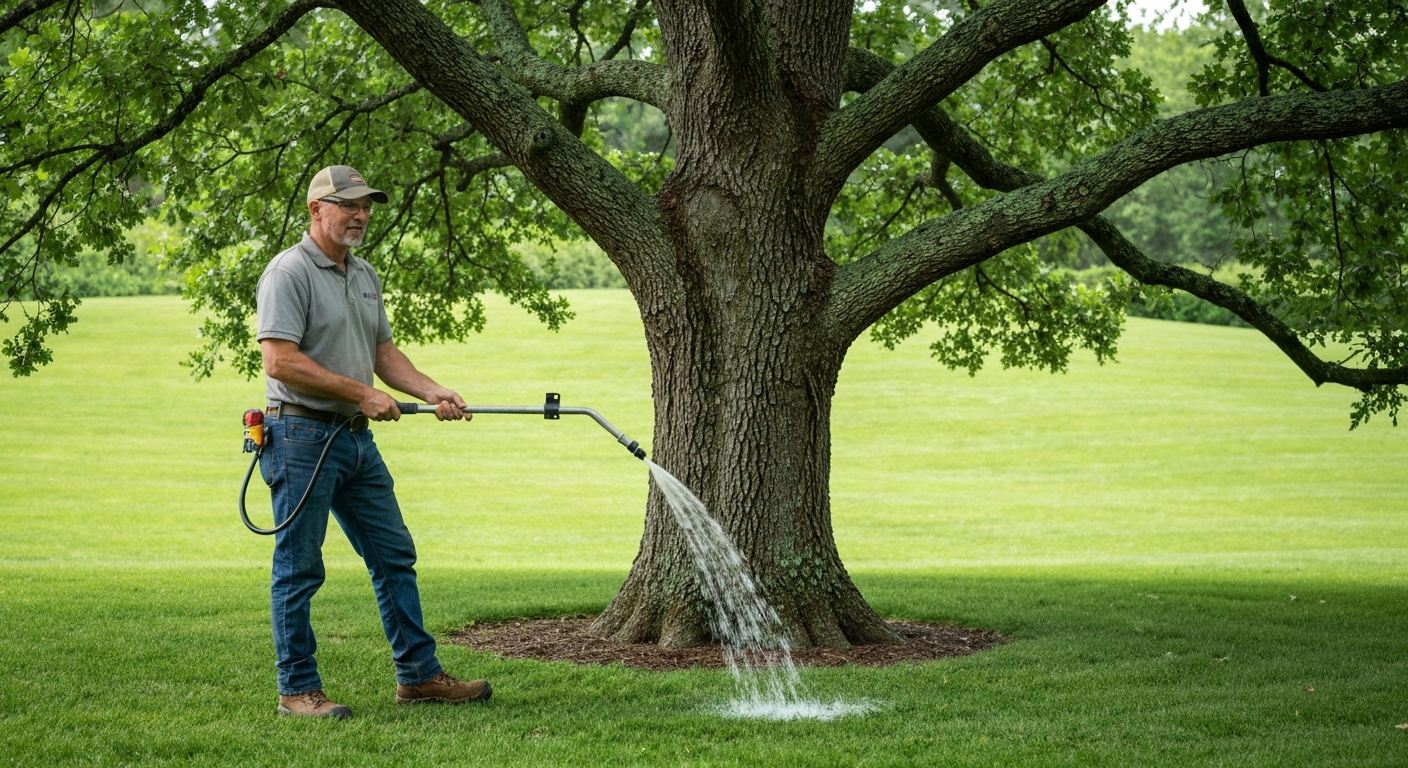
Deep Root Fertilization
Citrus trees need heavy feeding. We apply custom-blended fertilizers directly into the root zone, packed with nitrogen, iron, zinc, and manganese to ensure vibrant foliage and heavy fruit yields.
Canopy Management
Proper pruning improves airflow, reducing fungal issues, and allows sunlight to reach the interior fruit. We also remove 'suckers' that drain energy from the grafted canopy.
Irrigation Optimization
Overwatering is a leading cause of citrus decline. We assess the soil drainage and root collar to ensure the tree is receiving deep, infrequent watering without risking root rot.
Citrus Tree FAQs
Related Resources
Revive Your Citrus
Yellow leaves and poor fruit production can be fixed. Schedule a comprehensive inspection with our Certified Arborists.
Schedule Free Consultation