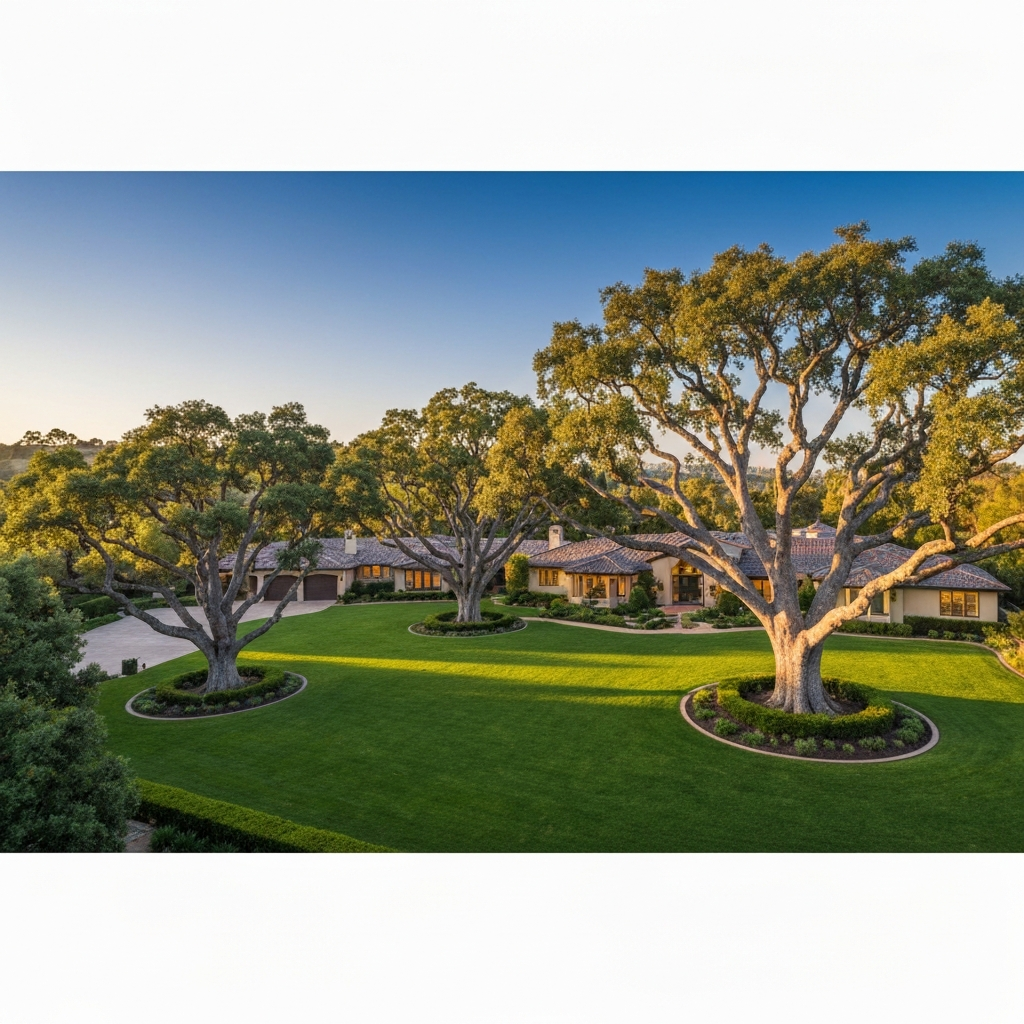
Defensible Space
Guidelines
How to meet Southern California fire codes and protect your property without destroying the beauty and shade of your mature trees.
What is Defensible Space?
Defensible space is the buffer you create between a building on your property and the grass, trees, shrubs, or any wildland area that surround it. In Southern California communities like Malibu, Calabasas, and Montecito, this space is not just a recommendation—it is required by law to slow or stop the spread of wildfire and protect your home from radiant heat and flying embers.
However, creating defensible space does not mean clear-cutting your property. Our Certified Arborists specialize in achieving strict fire code compliance while preserving the health, structural integrity, and aesthetic value of your luxury estate's landscape.
The Three Zones of Defensible Space
0Zone 0: Ember-Resistant Zone (0–5 feet)
The immediate 5 feet around your home and attachments (decks, patios). This zone is designed to keep wind-blown embers from igniting materials near your home.
- Remove all dead and dying plants, weeds, and debris.
- Remove combustible mulch (wood chips, bark) and replace with gravel or stone.
- Ensure tree branches do not overhang the roof or touch the structure.
1Zone 1: Lean, Clean and Green Zone (5–30 feet)
This zone requires careful spacing and maintenance to prevent fire from moving from the landscape to the home.
- Remove all dead plants, grass, and weeds.
- Remove dead or dry leaves and pine needles from your yard, roof, and rain gutters.
- Trim trees regularly to keep branches a minimum of 10 feet from other trees.
- Remove branches that hang over your roof and keep dead branches 10 feet away from your chimney.
2Zone 2: Reduced Fuel Zone (30–100 feet)
The goal here is to decrease the energy and speed of a wildfire before it reaches Zone 1.
- Cut or mow annual grass down to a maximum height of 4 inches.
- Create horizontal spacing between shrubs and trees.
- Create vertical spacing between grass, shrubs and trees (remove ladder fuels).
- Remove fallen leaves, needles, twigs, bark, cones, and small branches.
The Danger of "Ladder Fuels"
Ladder fuels are exactly what they sound like—a ladder for fire. When low-growing plants, shrubs, or tall grasses are planted directly beneath a tree, a small ground fire can easily climb up the "ladder" and ignite the tree's canopy. Once a fire reaches the canopy, it spreads much faster and generates significantly more radiant heat.
Our arborists focus heavily on vertical spacing. The general rule is to maintain a vertical clearance of at least three times the height of the lower shrub between the top of the shrub and the lowest tree branch.
Why You Need a Certified Arborist
Many homeowners hire general laborers to clear brush, resulting in "lion's-tailing" (stripping all interior branches from a tree) or excessive pruning that damages the tree's health, exposes the bark to sunburn, and invites pests like the Shot Hole Borer or Bark Beetles.
At Arborist Crew Services, we understand the delicate balance between satisfying strict fire department regulations and maintaining the physiological health of your mature Coast Live Oaks, Sycamores, and ornamental trees. We prune to ANSI A300 standards, ensuring your property is both safe and beautiful.
Frequently Asked Questions
What is defensible space?
Defensible space is the buffer you create between a building on your property and the grass, trees, shrubs, or any wildland area that surround it. This space is needed to slow or stop the spread of wildfire and it helps protect your home from catching fire—either from radiant heat or flying embers.
Do I have to remove all my trees to be fire-safe?
Absolutely not. In fact, removing all trees can increase fire risk by allowing more wind and sunlight to reach the ground, drying out brush and grass. The goal is to create horizontal and vertical spacing, remove deadwood, and eliminate 'ladder fuels' that allow fire to climb from the ground into the canopy.
What are ladder fuels?
Ladder fuels are combustible materials—like tall grass, shrubs, and low-hanging tree branches—that allow a fire to climb from the ground up into the tree canopy. Removing these is one of the most critical steps in creating defensible space.
What is the 0-5 foot Ember-Resistant Zone?
This is the most critical zone for home protection. It requires removing all combustible materials (including mulch, woody plants, and debris) within 5 feet of your home to prevent wind-blown embers from igniting the structure.
How far apart should tree canopies be spaced?
Spacing requirements depend on the slope of your property. On flat ground, canopies should be spaced 10 feet apart. On a mild slope, 20 feet apart. On steep slopes, 30 feet apart. Our Certified Arborists can help determine the exact requirements for your specific terrain.
Fire Safety Assessment
Have our Certified Arborists evaluate your property for fire risks, ladder fuels, and defensible space compliance.
Schedule AssessmentReady to Protect Your Property?
Schedule a defensible space consultation with our ISA Certified Arborists to ensure your estate is fire-safe and compliant.
Request a Free Consultation