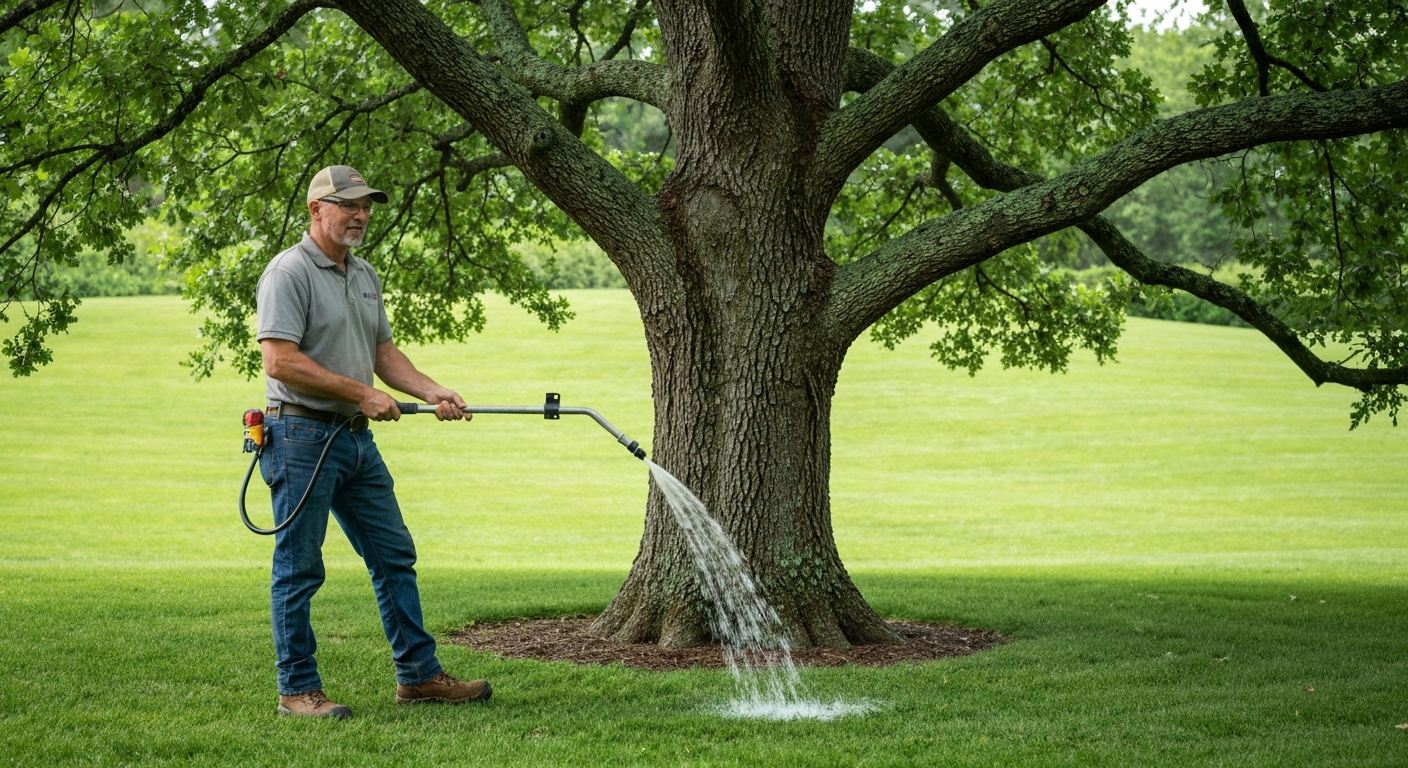
Coast Live Oak
The iconic, evergreen native of Southern California. Beautiful and drought-tolerant, but highly sensitive to overwatering and urban stress.
The Heart of the Southern California Landscape
The Coast Live Oak (Quercus agrifolia) is arguably the most important and recognizable native tree in Southern California. With its massive, twisting branches and dense, evergreen canopy, it defines the landscape from the coastal canyons of Malibu to the inland valleys of Thousand Oaks and Ojai.
Perfectly adapted to our Mediterranean climate, the Coast Live Oak evolved to thrive with wet winters and completely dry summers. This evolutionary adaptation is its greatest strength in the wild, but its greatest vulnerability in urban and suburban landscapes.
Because they are so deeply ingrained in the local ecology, Coast Live Oaks are heavily protected by municipal ordinances throughout Los Angeles, Ventura, and Santa Barbara Counties. Proper care by an ISA Certified Arborist isn't just recommended—it's often legally required.
Species Profile
- Scientific NameQuercus agrifolia
- Native OriginCalifornia Coast
- Growth HabitEvergreen, Spreading
- Lifespan250+ Years
- Mature Height30-80 Feet
- Drought ToleranceExtremely High
Common Problems
Despite their rugged appearance, Coast Live Oaks are highly sensitive to environmental changes and urban stress.
Oak Root Fungus
Armillaria mellea is the leading killer of oaks in residential landscapes. It thrives when the soil around the trunk is kept artificially moist during the summer through irrigation.
Goldspotted Oak Borer
An invasive beetle that attacks mature oaks, boring into the vascular tissue and cutting off water supply. Requires aggressive, professional Plant Health Care intervention.
Construction Damage
Trenching for irrigation, paving over root zones, or changing the soil grade can suffocate the roots. The tree may take 3-5 years to show signs of decline, but the damage is often fatal.
Recommended Plant Health Care
Preserving a mature Coast Live Oak requires a proactive, science-based approach. We recommend the following protocols.
Root Zone Management
Keep the root flare exposed. Remove turf grass from under the canopy and replace it with a 3-inch layer of natural oak leaf mulch to retain moisture and improve soil biology.
Strict Irrigation Control
Never allow sprinklers to hit the trunk. In severe drought, apply deep, infrequent watering at the dripline (the outer edge of the canopy), never near the base of the tree.
Deep Root Fertilization
In urban environments, we recommend annual soil testing followed by custom Deep Root Fertilization to replace the natural nutrients lost when leaves are raked away.
Annual Monitoring
Schedule a Certified Arborist to inspect the tree twice a year (Spring and Fall) to catch early signs of borers, fungal infections, or structural weaknesses.
Coast Live Oak FAQs
Related Resources
Protect Your Oaks
Don't leave the health of your most valuable trees to chance. Schedule a comprehensive inspection with our Certified Arborists.
Schedule Free Consultation