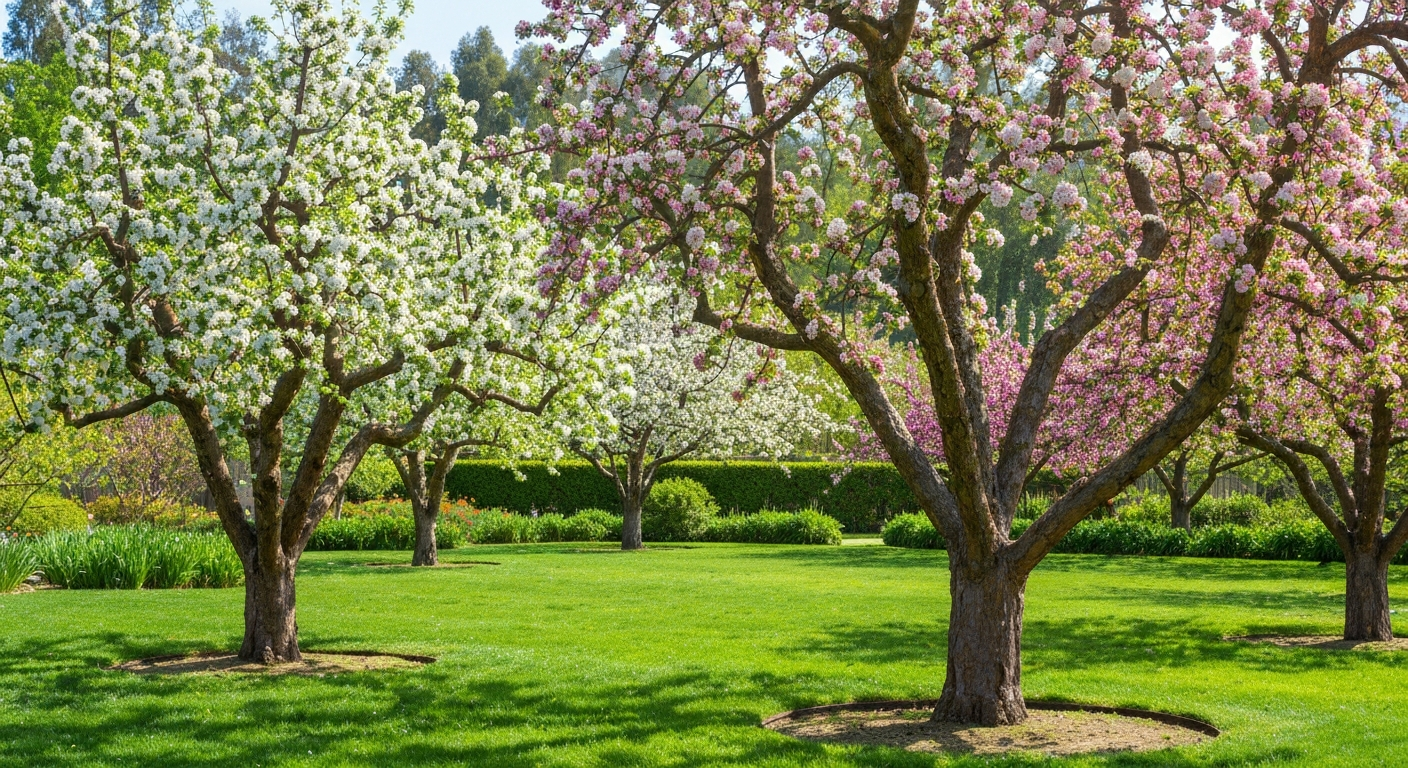
Fruit Trees
Care Guide
Southern California's climate is among the finest in the world for growing deciduous fruit trees. The difference between a struggling backyard tree and a productive estate orchard is informed arboricultural management.
Fruit Trees in Southern California
Southern California's Mediterranean climate — warm, dry summers and mild winters — supports a remarkably wide variety of deciduous and evergreen fruit trees. Apples, pears, plums, peaches, apricots, cherries, figs, pomegranates, persimmons, and stone fruits all perform well across our region when matched to the right microclimate and managed with care.
The single greatest advantage of SoCal fruit production is the extended growing season. With the right varieties and minimal frost risk, trees in coastal and valley locations can produce fruit for months longer than their counterparts in colder climates. The challenge is understanding what each species needs — chill hours, water management, soil nutrition, and pest monitoring all vary considerably by species.
Fruit trees on luxury estates and large residential properties represent a significant investment and aesthetic element. They require an arboricultural approach, not just a gardening approach. Annual structural pruning, integrated pest management, targeted fertilization, and regular professional monitoring are what separate a productive, beautiful orchard from a neglected collection of struggling trees.
This guide covers the general principles of fruit tree care in Southern California. For specific guidance on citrus and avocado — two of the most common and distinct fruit tree categories in our region — see our dedicated guides.
Common Fruit Trees in SoCal
Understanding Chill Hours — The Critical Factor
Most deciduous fruit trees require a certain number of "chill hours" — hours below 45°F — to break dormancy, flower, and set fruit properly. This is the most important climate consideration when selecting fruit trees for a Southern California property.
Coastal areas (Malibu, Santa Barbara, Carpinteria): 200–400 chill hours typical. Select specifically low-chill varieties of apples, peaches, and plums. Standard varieties will not produce reliably.
Inland valleys (Thousand Oaks, Calabasas, Westlake Village): 400–800+ chill hours. More variety options available. Standard and low-chill varieties both perform well in most years.
Mountain foothill areas (Ojai, parts of Santa Barbara County): Higher chill hours available. Standard high-chill varieties including many apple and cherry cultivars are viable.
Selecting the wrong chill-hour variety is one of the most common reasons fruit trees fail to produce in Southern California. An ISA Certified Arborist or horticultural consultant can help you select appropriate varieties for your specific site.
Site Selection
Full sun (minimum 6–8 hours daily) is non-negotiable for productive fruit trees. Avoid locations with late afternoon shade, frost pockets, or poor air circulation.
Soil Preparation
Deep, well-draining soil is essential. Amend heavy clay soils before planting. Raised beds and mounded planting sites significantly improve drainage and root health.
Rootstock Selection
Dwarf, semi-dwarf, and standard rootstocks dramatically affect tree size, productivity, and longevity. Rootstock selection should match your space, management capacity, and intended use.
Common Fruit Tree Problems in Southern California
Shot Hole Borer (PSHB)
The Polyphagous Shot Hole Borer has expanded its host range to include many fruit tree species, particularly stone fruits (peaches, plums, cherries) and some fig varieties. Watch for tiny entry holes, discolored staining around wounds, and dieback of individual branches. There is no cure — prevention through tree health and early detection is critical. See our Shot Hole Borer guide.
Brown Rot
A fungal disease caused by Monilinia species that affects stone fruits (peaches, plums, apricots, cherries). Brown rot causes blossoms and fruit to turn brown and become mummified. Wet spring weather accelerates spread. Preventive fungicide applications during bloom, combined with removal of mummified fruit and infected wood, are the primary management tools.
Peach Leaf Curl
A fungal disease that causes distorted, puckered, red-tinted leaves in peaches and nectarines, leading to early defoliation. Control requires a single dormant copper fungicide application applied after leaf drop in late fall or early winter — before the buds begin to swell. Missing this window means accepting leaf curl for the entire season.
Codling Moth
The primary pest of apples and pears in Southern California. Larvae tunnel into developing fruit, rendering them unmarketable. Management requires an integrated program: pheromone traps for monitoring flight activity, timed pesticide applications at peak egg hatch, and sanitation (removing infested fruit promptly). Organic options including kaolin clay and spinosad are available.
Scale & Mites
Various scale insects and spider mites affect fruit trees throughout Southern California. Horticultural oil applications during the dormant season control overwintering populations. Summer miticide and insecticide treatments address active season infestations. An integrated monitoring approach is most effective for preventing outbreaks before they cause significant damage.
Fire Blight
A bacterial disease affecting apples, pears, and related species. Infected shoots turn brown or black and bend in a characteristic "shepherd's crook." Fire blight spreads rapidly during warm, wet bloom periods. Management requires prompt removal of infected wood using sterilized pruning tools, and preventive copper bactericide applications during bloom.
Pruning Deciduous Fruit Trees
Best time to prune: Dormant season — late December through February, before bud break. Dormant pruning minimizes disease transmission, allows clean wound closure, and positions the tree for strong spring growth.
Young trees (years 1–3): Training is the priority. Select your desired tree form (open center for stone fruits, modified central leader for apples/pears) and scaffold branches. Remove competing leaders. Annual pruning during this period establishes the structure that determines lifetime productivity and health.
Mature trees: Annual dormant pruning removes dead and diseased wood, thins the crown for light penetration, removes suckers and water sprouts, and balances the fruiting wood. Proper annual pruning is the single most important factor in consistent, high-quality fruit production.
Thinning fruit: Counterintuitive but critical — removing 50–70% of developing fruit in early summer results in fewer but significantly larger, higher-quality fruit and prevents the tree from exhausting its resources.
Irrigation & Nutrition
Young trees: Deep watering every 7–10 days during the first 2–3 years, applied at the drip line. Critical to establish deep root systems before reducing frequency.
Established trees: Deep watering every 7–14 days during the growing season. Increase frequency during heat events and reduce significantly after harvest. Most deciduous fruit trees benefit from a dry dormant period — do not maintain turf irrigation frequency through the dormant season.
Fertilization timing: Apply fertilizer in early spring just before bud break. A second application after harvest supports root development and carbohydrate storage for next year's bloom. Never fertilize late in the season — it promotes tender growth vulnerable to frost.
Key nutrients: Nitrogen (growth and yield), phosphorus (root development, fruit set), potassium (fruit quality, disease resistance). Soil testing every 2–3 years provides an accurate baseline for amendment decisions.
Fruit Tree FAQs
Why isn't my fruit tree producing fruit?
The most common causes in Southern California: insufficient chill hours (wrong variety for your location), poor pollination (need a compatible pollinator variety nearby, or weather too cold/hot during bloom), over-fertilization with nitrogen, insufficient sunlight (less than 6 hours daily), or immature tree age (many trees require 3–5 years to begin bearing).
Do I need two fruit trees for pollination?
Depends on the species. Most stone fruits (plums, pluots, some peaches) require a compatible pollinator. Apples and pears almost always require cross-pollination. Figs, persimmons, pomegranates, and most citrus are self-fertile. Check the specific variety requirements when purchasing.
When should I prune my fruit trees?
The dormant season — after leaf drop and before bud break, typically December through February in Southern California. This is the most important maintenance activity for deciduous fruit trees. Skipping annual dormant pruning leads to declining yields, increasing disease pressure, and structural problems over time.
My peach tree has leaves that look crinkled and red. What is it?
This is peach leaf curl, a very common fungal disease. It cannot be cured once symptoms appear in spring — the only effective treatment is a preventive dormant copper fungicide application after leaf drop in late fall/early winter. Mark your calendar for this year's dormant period.
How much water does a fruit tree need?
Most deciduous fruit trees in Southern California need deep watering every 7–14 days during the growing season. During summer heat, every 7 days. During cool winter dormancy, monthly or less. Drip irrigation at the drip line is more efficient and healthier than overhead sprinklers.
What are the white/gray fluffy things on my apple tree?
This is likely woolly apple aphid — a common pest that produces white, waxy, cottony masses on branches, twigs, and roots. It creates galls on roots that can weaken the tree significantly. Contact a Certified Arborist for evaluation and treatment.
Is it worth hiring an arborist for fruit trees?
For single backyard trees, a knowledgeable gardener or home orchardist may suffice. For estate orchards, multiple trees, trees showing signs of serious disease or pest infestation, or trees that have not been producing well despite good care — absolutely. An ISA Certified Arborist brings a different level of diagnostic and structural management expertise than routine maintenance crews.
How do I deal with the Shot Hole Borer in my fruit trees?
PSHB is a serious and growing threat to stone fruits and some other fruit tree species in Southern California. There is no chemical cure — management focuses on removing severely infested wood, maintaining tree vigor through proper care, and monitoring. Contact a Certified Arborist immediately if you see tiny entry holes with dark staining on your fruit tree bark.
Related Resources
Get Expert Help With Your Fruit Trees
Whether you have a single backyard tree or a full estate orchard, our ISA Certified Arborists provide expert evaluation and care programs.
Schedule a Free Consultation