Southern California
Local Tree Care
Tree care is not one-size-fits-all. The coastal salt air of Malibu requires completely different management strategies than the dry, mature oak woodlands of Thousand Oaks. Discover how we tailor our expertise to your specific community.
Understanding Our Unique Microclimates
Southern California is renowned for its diverse geography. Within a 50-mile radius, you can transition from oceanfront estates battered by salt spray and wind, to sheltered coastal canyons, to hot and arid inland valleys.
This geographic diversity creates distinct microclimates. A successful Plant Health Care program must account for these localized conditions—including soil composition, average rainfall, diurnal temperature shifts, and native pathogen populations. Our Certified Arborists have spent decades mastering the nuances of tree care across Los Angeles, Ventura, and Santa Barbara Counties.
Los Angeles County
From the coastal salt spray of Malibu to the urban heat islands of Beverly Hills and the canyon winds of Bel Air.
Climate Profile
Coastal mediterranean to semi-arid inland. Highly variable microclimates.
Primary Environmental Concerns
- Coastal salt exposure
- Urban heat stress
- Canyon wind damage
- Compacted soils
Common Local Diseases
- Fusarium Wilt
- Pitch Canker
- Polyphagous Shot Hole Borer
Explore Local Communities
Signature Species
Ventura County
Characterized by mature oak woodlands, agricultural borders, and distinct temperature shifts between the coast and inland valleys.
Climate Profile
Mild coastal to hot, dry inland valleys. Significant diurnal temperature shifts.
Primary Environmental Concerns
- Wildfire risk in wildland-urban interfaces
- Drought stress
- Oak root fungus
- Agricultural pest crossover
Common Local Diseases
- Oak Root Fungus (Armillaria)
- Sudden Oak Death
- Anthracnose
Explore Local Communities
Signature Species
Santa Barbara County
Historic estates, coastal fog, and steep mountain drops create a unique environment for heritage trees and exotic species.
Climate Profile
Stable coastal mediterranean with regular marine layer (fog).
Primary Environmental Concerns
- Marine layer moisture (fungal issues)
- Steep slope erosion
- Historic tree preservation
- Fire hardening
Common Local Diseases
- Powdery Mildew
- Seiridium Canker
- Xylella fastidiosa (Olive Quick Decline)
Explore Local Communities
Signature Species
Regional Tree Care Challenges
Our comprehensive strategies for mitigating Southern California's toughest environmental stressors.
Wildfire & Defensible Space
In WUI (Wildland-Urban Interface) zones, proper tree spacing, lower limb removal, and species selection are critical. We specialize in fire-hardening estates while preserving landscape beauty, adhering to local fire department brush clearance regulations.
Drought Management
Extended droughts weaken tree defenses, inviting borers and bark beetles. We utilize growth regulators to reduce water demand, deep root fertilization to strengthen root systems, and custom irrigation consulting to maximize water efficiency.
Coastal Wind & Salt
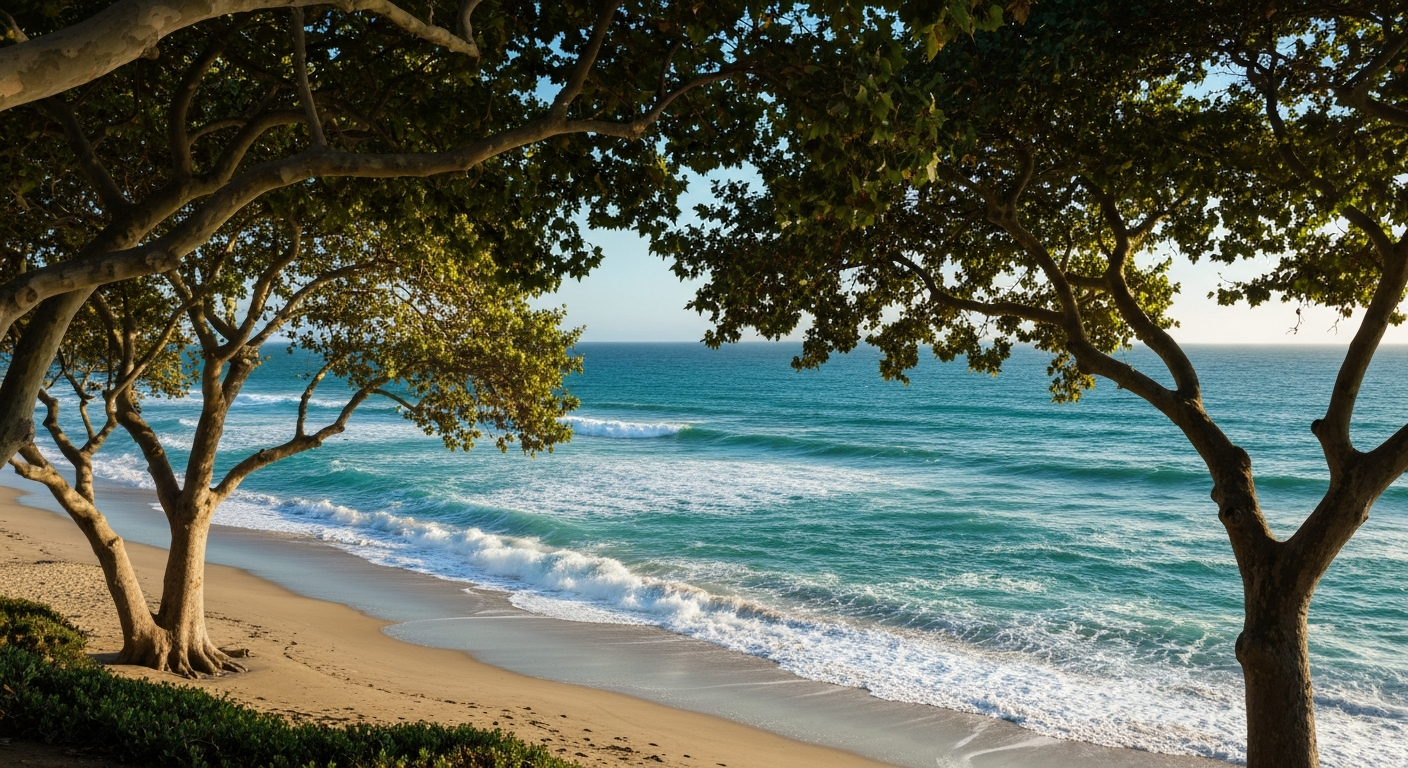
Trees in coastal communities like Malibu face relentless onshore winds and salt spray, leading to asymmetrical growth and foliar burn. We employ structural pruning to reduce wind resistance and soil therapies to flush accumulated salts from the root zone.
Local Tree Care FAQ
Why does tree care differ so much across Southern California?
Southern California is defined by its microclimates. A tree planted in the coastal fog of Montecito experiences completely different moisture levels, salt exposure, and temperature swings than the exact same species planted in the dry, hot inland valley of Thousand Oaks. Our care strategies must adapt to these hyper-local conditions to be effective.
What is 'fire hardening' and why is it important here?
Fire hardening involves creating defensible space around your property by strategically pruning trees, removing highly flammable species (like certain pines and eucalyptus near structures), and maintaining proper hydration. It is critical in high-risk zones like Ojai, Malibu, and Calabasas to slow the spread of wildfires.
How should I adjust my tree watering during a drought?
During drought, shift from frequent, shallow watering to deep, infrequent watering. This encourages roots to grow deeper into the soil where moisture is cooler and more stable. Mature native trees like Coast Live Oaks generally need very little supplemental water, while non-natives may require deep root soaking once a month.
Is coastal salt spray actually harmful to trees?
Yes, for many species. Salt spray can draw moisture out of leaves, causing 'burn' or necrosis on the leaf edges. It also alters soil chemistry over time. In coastal areas like Malibu and Pacific Palisades, we recommend salt-tolerant species and specialized soil flushing techniques if salt accumulation is high.
Why are my oak trees dying in Ventura County?
The most common culprits for oak decline in our region are Oak Root Fungus (Armillaria), drought stress followed by bark beetle infestation, and overwatering from adjacent lawns. Oaks need their root zones to dry out in the summer; constant irrigation is lethal to them.
What is the urban heat island effect?
In highly developed areas like Beverly Hills or Brentwood, concrete and asphalt absorb and radiate heat, significantly raising the ambient temperature. Trees in these environments suffer higher transpiration rates (water loss) and require specialized soil moisture management and heat-tolerant selection.
Do I need a permit to remove a tree?
Almost always, yes, if the tree is a protected species (like Oaks or Sycamores) or exceeds a certain size. Every city—from Thousand Oaks to Santa Barbara—has its own specific tree ordinance. We handle the arborist reports required for these permits.
Expert Care for Your Local Environment
Whether you manage a coastal estate in Montecito or an oak woodland in Thousand Oaks, our Certified Arborists have the local expertise to help your trees thrive.
