Pepper Trees
Care Guide
Graceful, drought-tolerant, and historically significant throughout Southern California — and increasingly recognized as a species that requires informed management to remain a landscape asset.
Understanding California Pepper Trees
The California Pepper Tree (Schinus molle) — also known as the Peruvian Pepper Tree — is not native to California, though it has been so deeply embedded in the Southern California landscape for over 150 years that it feels indigenous. Originally introduced from Peru and Bolivia, it thrives in our climate with almost no supplemental water once established.
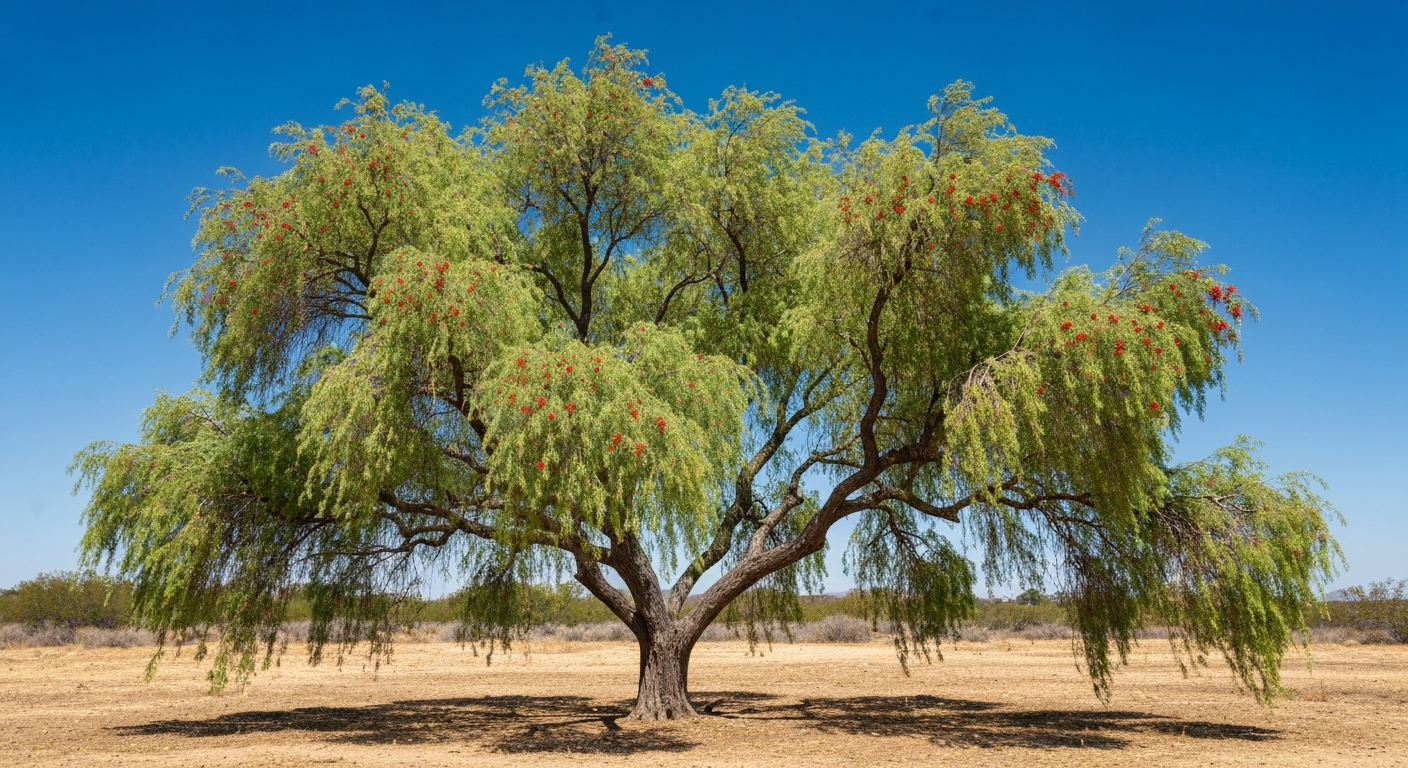
Pepper Trees are recognized by their graceful, weeping form, finely divided bright green leaflets, clusters of small rose-to-red berries (the source of commercial pink peppercorns), and a deeply furrowed, gnarled bark on older specimens. They are among the most visually distinctive trees in the Southern California landscape — romantic, textural, and remarkably low-maintenance.
The Brazilian Pepper Tree (Schinus terebinthifolius) is a separate species — more compact, with broader leaflets and brighter red berries. It is classified as invasive in Florida and Hawaii, though it is not as aggressively invasive in California's drier climate. The California/Peruvian Pepper Tree is the species most commonly found in mature landscape settings throughout our region.
Despite their charm, Pepper Trees present real management challenges: invasive tendencies, surface root issues, wood brittleness in older specimens, and an allelopathic quality (chemical compounds in fallen berries that can inhibit the germination of some other plants). Understanding these characteristics is essential for anyone stewarding a mature specimen.
Quick Reference
Common Problems With Pepper Trees
Surface Root Invasiveness
Mature Pepper Trees develop significant surface root systems that can lift driveways, crack patios, and compete aggressively with nearby plantings. The roots follow water sources — meaning irrigation lines, pools, and drainage systems are all potential targets. Root management programs and directed irrigation can help manage but not eliminate this tendency.
Wood Brittleness & Storm Damage
The wood of older Pepper Trees becomes increasingly brittle. Large limbs may fail in wind events or under the weight of dense foliage. Overextended lateral branches with poor taper are the most common failure points. Regular crown thinning and limb weight reduction through proper structural pruning reduces this risk significantly.
Allelopathy
Fallen Pepper Tree berries and leaves release chemical compounds that inhibit germination and suppress the growth of some other plant species in the root zone. If you're trying to establish groundcover or underplantings beneath a Pepper Tree, this is worth understanding. Raised planters and container plantings work better than direct in-ground planting in the root zone.
Scale & Aphids
Various scale insects and aphids infest Pepper Trees, producing honeydew and promoting sooty mold on surfaces below. Infestations are typically manageable with targeted treatment. Annual monitoring by a Certified Arborist detects infestations before they become severe. See our Aphids guide.
Overwatering Sensitivity
Pepper Trees evolved in dry conditions and perform best with minimal supplemental irrigation once established. Trees in turf areas receiving frequent irrigation often show root rot, crown decline, and premature structural failure. Separating Pepper Tree irrigation from surrounding turf irrigation systems is important for long-term health.
Verticillium Wilt
Schinus molle is susceptible to Verticillium wilt, a soilborne fungal disease that causes progressive wilting and branch dieback. There is no cure. Management focuses on maintaining tree vigor through proper irrigation and fertilization to slow progression. Severely affected trees may need removal to prevent spread.
Pruning Pepper Trees
Best time to prune: Late winter to early spring, before new growth flush. Light deadwood removal can be done year-round.
Pruning frequency: Every 2–3 years for established trees. The goal is maintaining structural integrity, not controlling size. Frequent heavy pruning stimulates rapid regrowth and does not achieve size reduction.
Key objectives: Remove dead and declining wood. Reduce overextended laterals through thinning cuts (not heading cuts). Improve clearance from structures and pedestrian areas. Preserve the graceful weeping character that defines this species.
Common mistakes: Topping (creates weak water sprout regrowth and accelerates structural decline), lion-tailing (removes interior foliage and shifts weight to branch tips), and heavy crown reduction that destroys the natural weeping form.
ANSI A300: No more than 20% live crown removal per cycle. Document all structural work.
Irrigation & Nutrition
Young trees: Water deeply every 7–14 days for the first 2–3 years. Pepper Trees establish quickly and transition to minimal water needs faster than most landscape trees.
Established trees: Monthly deep watering during dry summer months is typically adequate. In many coastal Southern California locations, established Pepper Trees thrive on rainfall alone.
Critical rule: Do not allow frequent shallow irrigation to reach the root zone. This is the single most damaging thing you can do to an established Pepper Tree. Separate the tree from surrounding turf irrigation schedules.
Fertilization: Light applications of balanced slow-release fertilizer every 2–3 years are sufficient. Pepper Trees in native or disturbed soils often require no supplemental fertilization at all. Over-fertilization promotes excessive, brittle growth.
Pepper Tree FAQs
Are Pepper Trees invasive in Southern California?
The California/Peruvian Pepper Tree (Schinus molle) is naturalized in parts of Southern California but is not classified as a significant invasive species in our region (unlike in Florida or Hawaii). It does self-seed readily in disturbed soils, and plants along watercourses should be monitored. The Brazilian Pepper (Schinus terebinthifolius) has more aggressive invasive potential and is listed as invasive in some California counties.
My Pepper Tree branches are cracking and falling. Is it dying?
Branch failure in Pepper Trees is usually a structural issue, not a disease issue. Overextended lateral branches with poor taper are the primary cause. A Certified Arborist can evaluate the crown structure and perform corrective pruning to reduce failure risk. Annual inspection before storm season is strongly recommended for mature specimens.
Why are my Pepper Tree berries killing the grass below?
Pepper Trees are allelopathic — they release compounds in their berries and leaf litter that inhibit some plant growth. This is normal biology, not disease. Rake up fallen berries regularly, or accept that underplanting options directly beneath a Pepper Tree are limited.
Can I plant near my house?
Maintain at least 15–20 feet from foundations. Pepper Tree roots follow water, and plumbing, pools, and irrigation systems are all attractive targets. Surface roots can lift hardscape within 10–15 years of planting.
How long do Pepper Trees live?
With proper care, 100–200+ years. There are specimens in Southern California well over 150 years old. Their longevity is one of their most valuable qualities — a mature Pepper Tree is an irreplaceable landscape asset.
Are Pepper Trees fire resistant?
No. Like most trees with fine, resin-containing foliage, Pepper Trees are flammable. In high-fire-risk zones, they should not be planted within the immediate defensible space zone (0–30 feet from structures). Their dead branch accumulation in neglected specimens increases fire risk significantly.
Are the pink berries edible?
The pink/red berries of Schinus molle are the source of 'pink peppercorns' used in culinary applications. They are generally considered safe in small amounts for most adults, though they contain compounds that can cause allergic reactions in some individuals, particularly those with cashew or mango allergies. The berries are mildly toxic to some pets and birds. Consult a medical professional before consuming.
Related Resources
Questions About Your Pepper Tree?
A mature Pepper Tree is one of Southern California's most valuable landscape assets. Our ISA Certified Arborists will help you protect it.
Schedule a Free Consultation