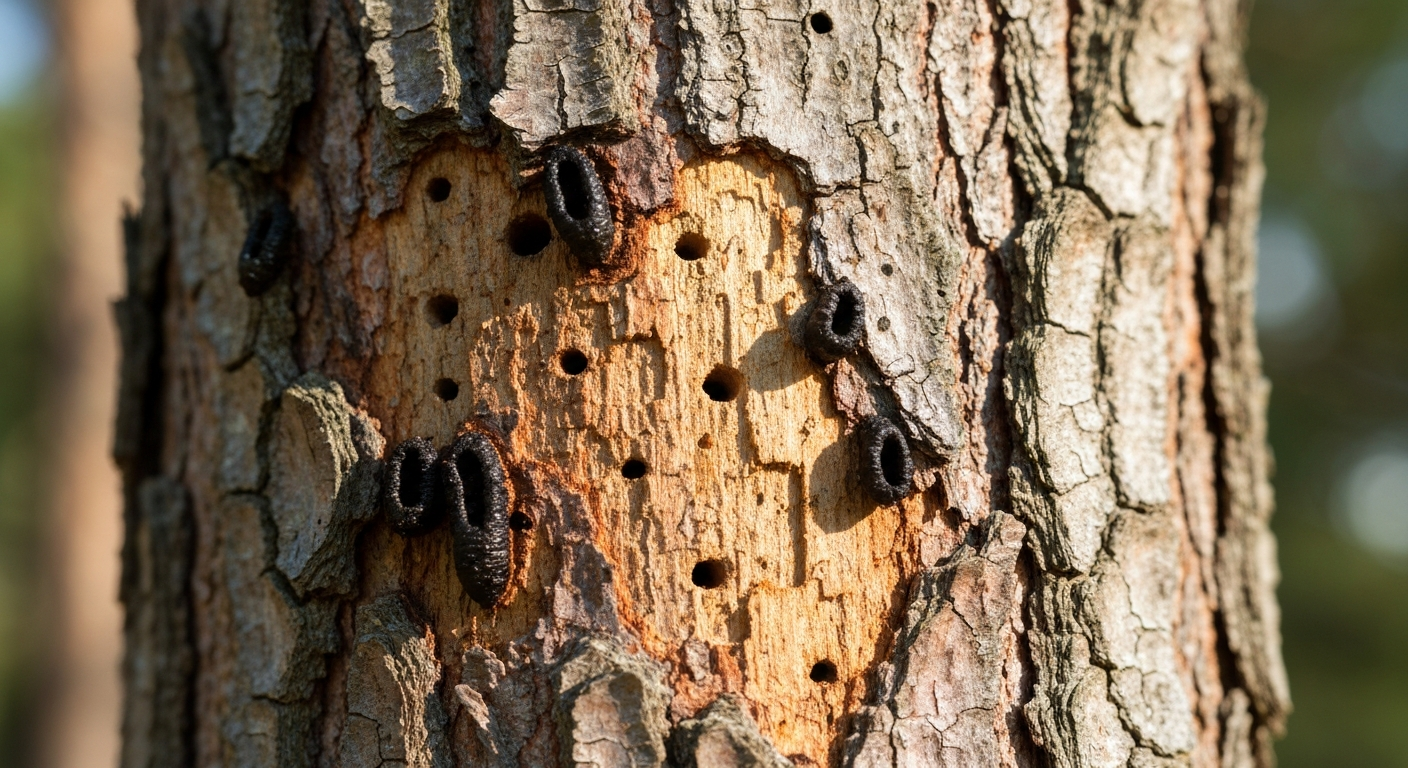
Bark Beetles
Destructive, opportunistic pests that target stressed trees, boring through the bark to destroy vital vascular tissue and introduce lethal fungi.
The Executioners of Stressed Trees
Bark beetles are often the final nail in the coffin for trees suffering from drought, root damage, or old age. While healthy trees can defend themselves by pushing beetles out with sap, stressed trees emit chemical signals that actually attract swarms of beetles.
What causes the problem? Once a beetle breaches the bark, it excavates tunnels (galleries) in the cambium layer to lay eggs. The hatched larvae continue tunneling, effectively girdling the tree from the inside and cutting off the flow of water and nutrients.
Long-term consequences: Bark beetle attacks are highly lethal. By the time the tree's canopy turns brown, the tree is already dead. Even worse, as the tree dies, the next generation of beetles emerges to attack neighboring trees, turning a single stressed tree into a property-wide epidemic.
Pest Profile
- Pest TypeWood-Boring Insect
- Primary TargetsPines, Oaks, Stressed Trees
- Key IndicatorPitch Tubes / Boring Dust
- Environmental TriggerDrought / Stress
- LethalityExtremely High
Warning Signs
Pitch Tubes
Small blobs of sap (often mixed with sawdust) on the trunk. This is the tree's attempt to flush the beetle out of the hole.
Boring Dust (Frass)
Fine, reddish-brown sawdust collecting in bark crevices, spider webs, or around the base of the tree.
Rapid Canopy Death
The entire canopy suddenly turns yellow, then reddish-brown. By this stage, the tree is usually unsalvageable.
What Can Be Done?
With bark beetles, prevention is infinitely more successful than a cure. Once the tree's vascular system is compromised, options are limited.
- Preventative SpraysProtective barrier sprays applied to the trunk before beetles attack can save high-value trees during outbreaks.
- Stress ReductionDeep watering during droughts and proper fertilization build the tree's natural defense mechanisms.
- Prompt RemovalDead or heavily infested trees must be removed quickly to prevent the emerging beetles from attacking adjacent healthy trees.
When to Call an Arborist
If you see pitch tubes, boring dust, or rapid color changes in the canopy, call immediately. If you have valuable pines or oaks during a drought, call for preventative protection.
Schedule an Assessment