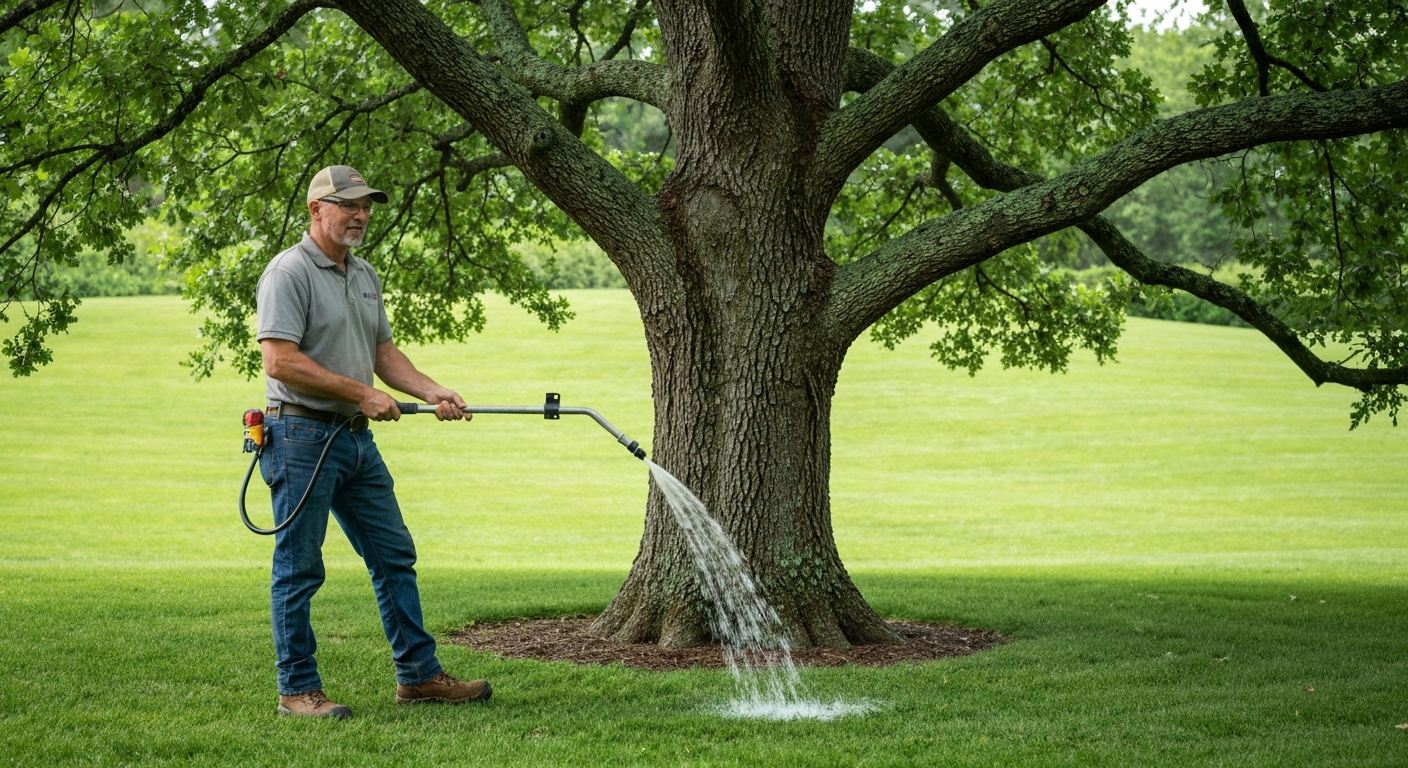
Valley Oak
The majestic giant of the inland valleys. The largest of all North American oaks, requiring deep soils and specialized structural care.
The Monarch of the Inland Valleys
The Valley Oak (Quercus lobata) is a true giant. Endemic only to California, it is the largest species of oak in North America, capable of reaching heights of 100 feet with massive, sweeping canopies that define the landscape of inland Southern California communities like Thousand Oaks, Agoura Hills, and the Ojai Valley.
Unlike the Coast Live Oak, the Valley Oak is deciduous. It drops its lobed leaves in the winter, exposing a stunning, deeply ridged trunk and an intricate, twisting branch structure. They thrive in deep, rich soils where their taproots can reach groundwater.
Because of their massive size and the fact that they often grow in close proximity to homes and estates, Valley Oaks require meticulous structural pruning and proactive Plant Health Care to prevent catastrophic branch failure and soil-borne diseases.
Species Profile
- Scientific NameQuercus lobata
- Native OriginCalifornia Inland Valleys
- Growth HabitDeciduous, Massive Canopy
- Lifespan300 - 600 Years
- Mature Height70-100+ Feet
- Drought ToleranceHigh (Deep Roots)
Common Problems
Their massive size makes structural integrity the primary concern, followed closely by root disease caused by urban irrigation.
Sudden Branch Drop
Mature Valley Oaks are notorious for suddenly dropping massive, seemingly healthy branches during hot, calm summer days. Regular structural pruning by an arborist is essential to reduce end-weight.
Oak Root Fungus
Like all native oaks, they are highly susceptible to Armillaria. Summer watering near the trunk creates the perfect environment for this deadly, incurable soil pathogen.
Soil Compaction
Because they often sit in the middle of lawns or near driveways, foot and vehicle traffic compresses the soil, suffocating the feeder roots and causing slow, irreversible decline.
Recommended Plant Health Care
Managing a tree of this size requires a long-term strategy. We recommend the following protocols for estate and commercial Valley Oaks.
Dormant Structural Pruning
Pruning should occur in the winter when the leaves have fallen. This allows the arborist to clearly see the architecture of the tree and make precise cuts to reduce weight and prevent failure.
Dripline Irrigation Management
Ensure all irrigation is kept at least 10-15 feet away from the trunk. If deep watering is required during a drought, it must be applied at the outer edge of the canopy.
Root Zone Care & Air Spading
For trees suffering from compacted soil, we use supersonic air spading to safely break up the soil without cutting roots, followed by the application of organic compost and mulch.
Tree Risk Assessments
Because Valley Oaks grow so large, they present a significant liability if they fail. An annual Tree Risk Assessment by an ISA Certified Arborist is crucial for estate management.
Valley Oak FAQs
Related Resources
Manage Your Valley Oak
These massive trees require specialized care and risk management. Schedule a comprehensive inspection with our Certified Arborists.
Schedule Free Consultation