Palm Trees
The iconic symbol of Southern California. Palms require highly specific nutritional care and precise pruning to defend against deadly diseases and invasive pests.
The Signature of the SoCal Skyline
Palm trees are synonymous with the Southern California lifestyle. From the towering Mexican Fan Palms of Los Angeles to the majestic Canary Island Date Palms of Montecito estates, they define our coastal and inland landscapes.
However, palms are biologically unique—they are actually more closely related to grasses than to broadleaf trees. Because of this, their care requirements are completely different. They have a single growing point (the crown), meaning any damage to the top of the tree is often fatal.
Today, Southern California palms face unprecedented threats. The invasive South American Palm Weevil is decimating Date Palms, while incurable fungal diseases like Fusarium Wilt are easily spread by unsterilized pruning tools. Proper, science-based Plant Health Care is essential to protect these valuable assets.
Species Profile
- Scientific NameArecaceae (Various)
- Common TypesDate, Fan, Queen, King
- Growth HabitSingle Trunk, Apical Meristem
- Lifespan50 - 150+ Years
- Mature Height20-100+ Feet
- Nutrient NeedsHigh (Mg, K, Mn)
Common Problems
Palms face severe threats from invasive insects, incurable fungal diseases, and chronic nutrient deficiencies in urban soils.
South American Palm Weevil
A highly destructive invasive pest that primarily attacks Canary Island Date Palms. The larvae bore into the crown, destroying the growing point and killing the palm. Preventative treatments are critical.
Fusarium Wilt
An incurable, fatal fungal disease that spreads rapidly via unsterilized pruning tools (like chainsaws). It causes fronds to die off rapidly, usually starting on one side of the canopy.
Nutrient Deficiencies
Palms require high levels of Potassium, Magnesium, and Manganese. Southern California's alkaline soils often 'lock up' these nutrients, causing yellowing, frizzy new growth, and overall decline.
Recommended Plant Health Care
Preserving luxury palms requires precise nutritional management and strict sanitation protocols.
Sanitary Pruning Protocols
To prevent Fusarium Wilt, our arborists strictly sterilize all tools before touching a palm. We never use climbing spikes, and we only remove dead, brown fronds—never healthy green ones.
Targeted Palm Fertilization
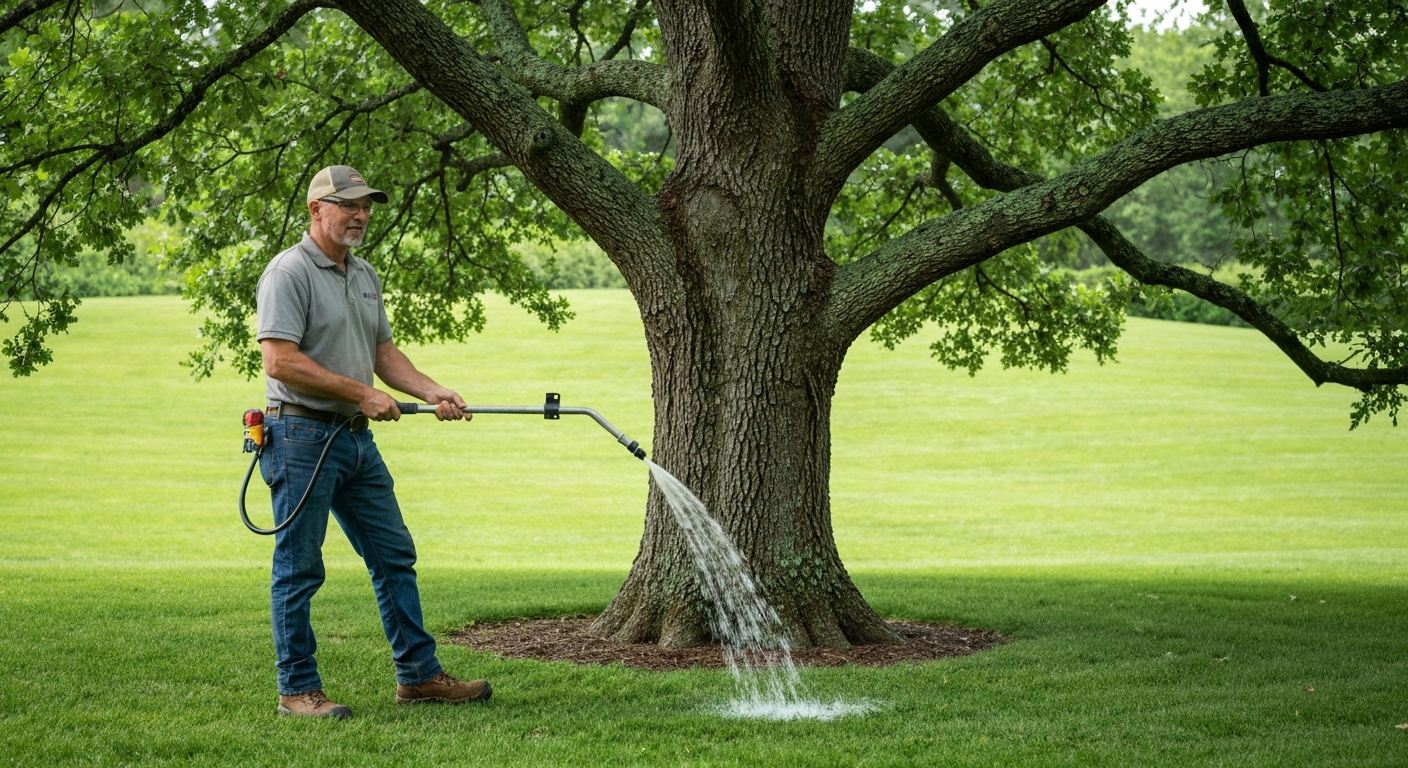
Standard tree fertilizer will not work on palms. We utilize specialized Deep Root Fertilization blends rich in Potassium, Magnesium, and micronutrients to correct deficiencies and restore vibrant green canopies.
Preventative Weevil Treatments
For high-value Canary Island Date Palms, we recommend proactive systemic treatments to protect the crown from the South American Palm Weevil. Once infested, recovery is very difficult.
Annual Maintenance
Palms should be scheduled for annual cleaning to safely remove heavy seed pods and dead fronds before they become a hazard to the property below.
Palm Tree FAQs
Related Resources
Protect Your Palms
Don't trust your luxury palms to untrained trimmers. Schedule a comprehensive inspection with our Certified Arborists.
Schedule Free Consultation