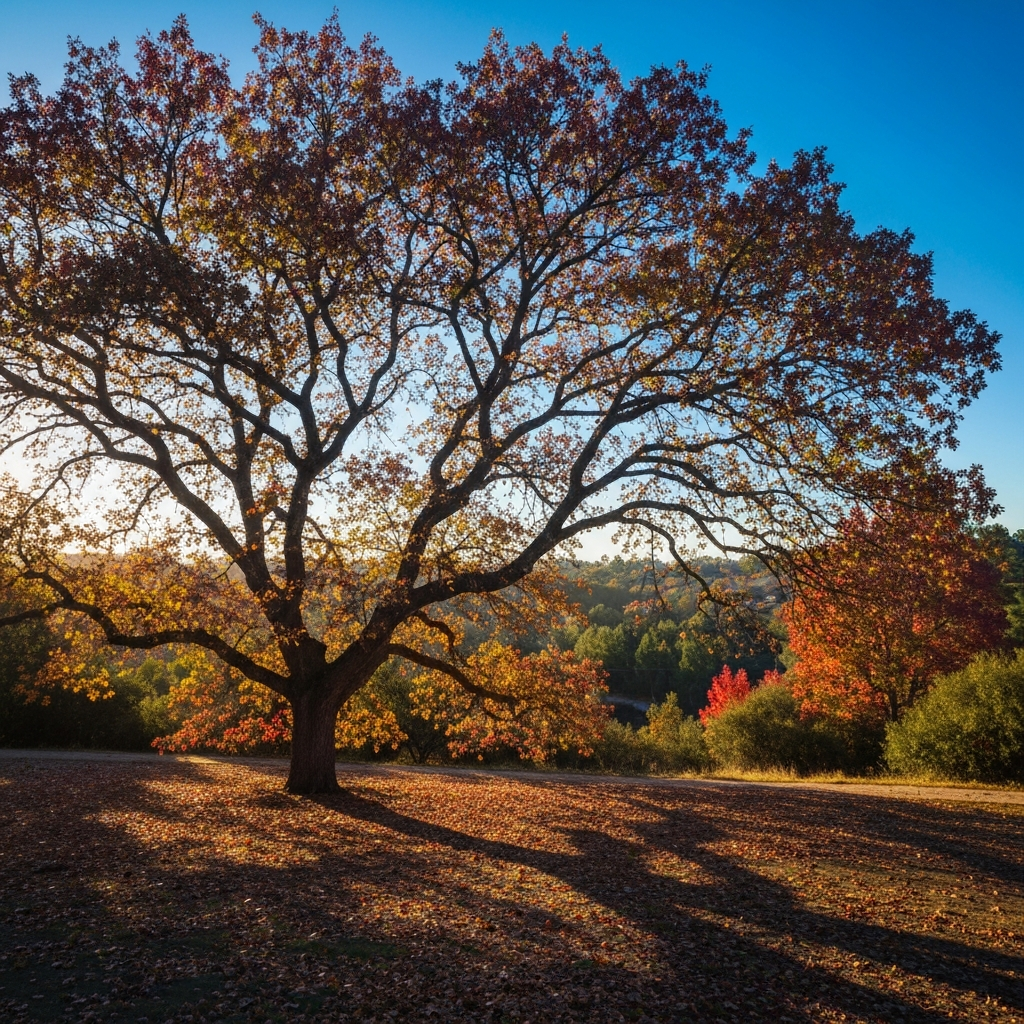
Fall Tree Care
The season of recovery. Preparation for dormancy, soil improvement, and deep root fertilization to help trees recover from summer stress.
The Critical Recovery Period
In Southern California, fall is arguably the most important season for tree care. After enduring months of intense heat and drought, trees shift their energy from canopy growth to root development and storing energy for the winter.
What causes the problem? Summer depletes the soil of nutrients and moisture, leaving trees exhausted. As temperatures cool, trees desperately need resources to repair damaged tissues and expand their root systems before the rainy season.
Long-term consequences: Trees that enter winter in a depleted state are highly susceptible to disease, have poor spring growth, and are more likely to fail during winter storms due to weak root systems.
Fall Priorities
- Primary FocusRoot Growth & Recovery
- Key ActionDeep Root Fertilization
- Disease RiskSoil Pathogens
- PreparationSanta Ana Winds
Fall Checklist
Deep Root Fertilization
Fall is the absolute best time to fertilize. Nutrients applied now are absorbed by the actively growing roots and stored over winter, creating a massive explosion of healthy growth in the spring.
Learn About Fertilization →Wind Preparation
Santa Ana winds peak in the fall. Inspect large trees for structural weaknesses, heavy end-weight, or deadwood that could snap in high winds.
Risk Assessments →Sanitation
Rake and remove fallen leaves, especially from trees that suffered from Anthracnose or Powdery Mildew, to prevent spores from overwintering in the soil.
Recommended Services
Fall Plant Health Care focuses on soil improvement, root development, and structural safety.
- Soil Testing & AmendmentAnalyzing soil deficiencies after summer and applying organic amendments to improve soil biology.
- Deep Root FertilizationInjecting essential nutrients directly into the active root zone for winter storage.
- Structural PruningAs deciduous trees lose their leaves, it is the perfect time to identify and correct structural defects before winter storms.
Planting Season
Fall is the absolute best time to plant new trees in Southern California. The soil is still warm, encouraging rapid root growth, while the cooler air reduces stress on the canopy, giving the tree a massive head start before next summer.
Schedule an Assessment