The Best Time to Prune Citrus in Southern California
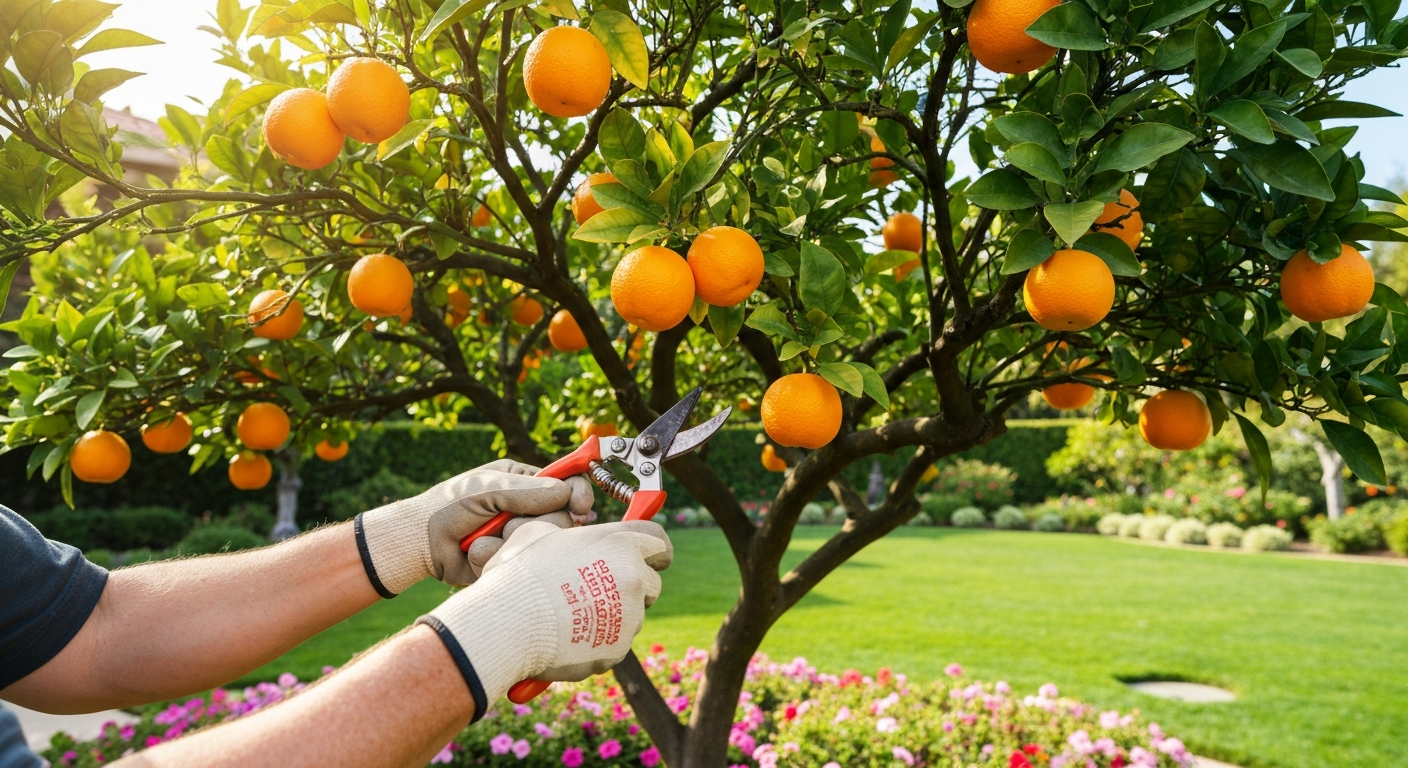
Walk through almost any neighborhood in Ventura County or the Santa Monica Mountains in late winter and you'll see it — homeowners with pruning shears, loppers, and sometimes chainsaws, cutting back their citrus trees during what they believe is the correct dormant window. Most of them are wrong about the timing, and many are making cuts that will cost them a full season of fruit, invite disease, or permanently damage the tree's structure.
This isn't a criticism — citrus pruning is genuinely counterintuitive, especially if you come from regions with true winter dormancy. In Southern California, the rules are different.
Here's what 30 years of working with citrus trees along the coast has taught us.
The Fundamental Rule: Citrus Is Never Truly Dormant
Unlike deciduous fruit trees — apples, peaches, plums — citrus doesn't drop its leaves and enter a clear rest period. It slows down in winter, but it continues photosynthesizing, and it's actively setting the flower buds that will become your spring fruit.
This means the instinct to prune in January or February — the time many gardeners learned to prune fruit trees — is precisely when you should leave your citrus alone.
Heavy pruning during the late winter flush of bud development removes the flowering wood and eliminates a significant portion of the upcoming crop.
The Right Window: Late Spring After Harvest
The ideal time to prune most citrus in Southern California is late spring, after fruit has been harvested and after the spring flush of new growth has hardened off — typically April through June, depending on the variety.
By this point:
- The fruit has been picked (or dropped naturally)
- The spring flowering and fruit set is complete
- New growth from the spring flush has matured enough to handle the stress of pruning
- The tree has a full summer of active growth ahead to recover and set next year's buds
For varieties with a fall or winter harvest — navel oranges, for example — prune in late spring after the fruit is off. For summer-bearing varieties like Valencia orange, time the pruning for just after harvest, which may push into early summer.
What to Actually Cut — and What to Leave Alone
Most citrus in Southern California needs far less pruning than people assume. The goal is not to heavily shape the tree or reduce its size significantly — it's to maintain airflow, remove dead or crossing wood, and keep the canopy productive.
Remove:
- Dead, diseased, or damaged branches (any time of year — don't wait)
- Suckers growing from below the graft union — these will eventually take over the tree with inferior rootstock growth
- Branches crossing and rubbing against each other
- Water sprouts — the vigorous, vertical shoots that grow straight up from major branches and rarely produce fruit
- Any branches growing into the interior of the canopy that block light and airflow
Leave alone:
- Healthy, outward-growing branches with good light exposure — these are your fruiting wood
- The overall canopy shape — citrus naturally grows into a pleasing rounded form that rarely needs correction
- Small twiggy growth in the canopy interior — while it looks cluttered, it often carries fruit
A Word on Heavy Pruning and Sunburn
One of the most damaging mistakes we see is aggressive size reduction of citrus — cutting the tree back by a third or more in a single season. Beyond the loss of fruiting wood, severe pruning suddenly exposes previously shaded bark to direct sun, causing sunscald and bark cracking that opens the tree to disease and borers.
If a citrus tree has been neglected and genuinely needs significant reduction, spread the work over two or three seasons. Take no more than 25% of the canopy in any single year, and consider applying diluted white latex paint to newly exposed bark on the south and west-facing sides to prevent sunscald.
Citrus-Specific Notes by Variety
- Navel Orange: Harvest October–January. Prune late spring (April–May). Avoid any pruning that removes the tips of branches — navels fruit on the ends of last year's growth.
- Meyer Lemon: Bears fruit nearly year-round. The best time to prune is after the heaviest flush of fruit — typically spring. Light maintenance pruning can be done any time.
- Mandarin/Clementine: These tend toward biennial bearing (heavy one year, light the next). Prune in late spring. Thinning fruit in heavy years can improve size and encourage a more consistent annual yield.
- Blood Orange: Similar to navel in pruning requirements. Harvest February–March; prune in late spring.
- Grapefruit: Most forgiving of pruning timing. Can be lightly pruned in late spring without significant crop loss.
When to Call a Professional
We generally recommend homeowners handle light maintenance pruning — removing dead wood, suckers, and crossing branches — themselves with clean, sharp tools. But there are situations where an arborist on staff should be involved:
- Trees that have been severely neglected and need structural correction
- Trees showing signs of disease (citrus greening, tristeza, brown rot)
- Large trees where safe pruning requires ladders or aerial work
- Any situation where you're uncertain about what to remove
We offer citrus consultations throughout Ventura, Los Angeles, and Santa Barbara counties. Sometimes a 20-minute walk-through with an arborist on staff saves years of trial and error.
The Short Version
Don't prune citrus in January or February. Wait until after harvest and after the spring growth flush hardens — late April through June for most varieties. Remove dead wood, suckers, and crossing branches. Leave healthy outward-growing wood alone. And when in doubt, do less rather than more.
Your tree will thank you with a full season of fruit.
Need an Expert Assessment?
Our arborists on staff can help you establish the perfect pruning and care schedule for your citrus trees.
Request a Free Consultation